IUI (Intrauterine Insemination) Treatment in Malaysia
Intrauterine Insemination (IUI) is often recommended as a first-line fertility treatment for couples facing unexplained infertility, mild male factor infertility, or cervical factor infertility. At KL Fertility Centre, IUI is performed within an internationally accredited environment, supported by RTAC certification and more than 25 years of fertility expertise.
Treatment involves carefully timed insemination, using individualized stimulation protocols and advanced sperm preparation techniques to enhance the chances of conception. The process is minimally invasive, cost-effective compared to IVF, and can be an encouraging first step for many couples beginning their fertility journey.
Malaysia’s growing reputation for fertility care makes KL Fertility Centre a trusted destination, combining global standards with patient-centred support to deliver safe, effective IUI treatment.
25+
Years of Fertility Expertise
No Surgery
Minimally Invasive Procedure
RTAC
Internationally Accredited
RM2,000
Starting Cost Per Cycle
| What You Need To Know | |
|---|---|
| Length of Procedure: | 5 minutes (insemination of sperm) |
| Preparation: | Come for the procedure with a full bladder. |
| Anesthesia | Nil |
| Overnight/Day care: | Nil |
| Risks/Complications of Surgery: | Nil |
| Recovery: | immediate |
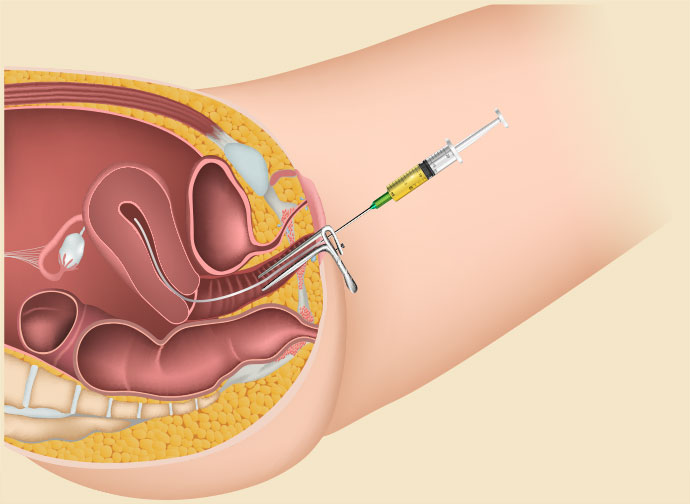
Intra-uterine Insemination (IUI)
IUI, simple fertility treatment (or known as Intrauterine Insemination) is the first line of treatment especially when no fertility problem is identified. It is meant to be easy and inexpensive but may need to be repeated multiple times as pregnancy rates are only low each time it is performed.
How does IUI work?
This is the simplest form of assisted conception treatment. IUI is a type of fertility treatment which It involves with inserting sperm into the wife’s uterus at the time of ovulation. The sperm sample is first prepared to remove dead and weak sperm and the best sperm are then strengthened even further to improve their ability to make a baby. Nevertheless, bear in mind that IUI (Intrauterine Insemination) has less chance to function for women above 40 years old.
During the process, the wife too is usually given hormonal medications (tablets and occasionally hormonal injections) so that she will produce more eggs from her ovaries. This combination of good sperm, extra eggs and timing during ovulation is the key to success. IUI for infertility treatment is useful for couples with unexplained infertility and where the partner’s sperm is slightly below normal. It cannot be used where the fallopian tubes are damaged or where the sperm is very poor.
Who is a Good Candidate for IUI?
IUI is most effective for specific fertility profiles. Your fertility specialist will assess your individual situation before recommending IUI or an alternative treatment.
The IUI Process at KL Fertility Centre
A stimulated IUI cycle at KL Fertility Centre typically follows these steps:
-
1
Initial Fertility Assessment
Both partners undergo a full fertility workup: semen analysis for the male partner, and a pelvic ultrasound, hormonal profile (AMH, FSH, LH), and fallopian tube patency check (HSG) for the female partner.
-
2
Ovarian Stimulation
The female partner is prescribed hormonal medication (tablets or injections) to stimulate the development of one or more mature follicles. This increases the number of eggs available during the cycle.
-
3
Cycle Monitoring
Regular ultrasound scans and blood tests are performed to track follicle growth and determine the optimal timing for insemination. When follicles reach the ideal size, a trigger injection (hCG) is given to induce ovulation.
-
4
Sperm Preparation
The male partner provides a sperm sample on the day of the procedure. The sample is processed in the laboratory to select highly motile sperm and remove seminal fluid, debris, and less motile sperm before insemination.
-
5
Insemination
The prepared sperm is carefully inserted directly into the uterus using a thin, flexible catheter. The procedure usually takes only a few minutes, does not require anaesthesia, and may cause mild discomfort or cramping for some patients. Most patients can resume normal activities soon after.
-
6
Luteal Phase Support & Pregnancy Test
Progesterone support may be prescribed following the procedure. A blood pregnancy test (beta-hCG) is performed approximately 14 days after insemination to confirm results.

IUI Success Rates
IUI success rates are generally lower than IVF, and this is important to understand before starting treatment. Success varies depending on age, sperm quality, and ovarian response — factors that differ for every patient.
If IUI does not result in pregnancy after 2 to 3 cycles, IVF is generally the recommended next stage. It is worth understanding what those cycles mean in practice:
- Each IUI cycle takes approximately one month
- 3 IUI cycles means approximately 3 months of treatment time
- The total cost of 3 IUI cycles can add up to approximately RM10,000
For couples where time is a factor, particularly women in their mid-30s or above, it may be worth discussing directly with your Fertility Specialist whether IVF is a more effective starting point for your situation.
At KL Fertility Centre, your specialist will assess your individual profile and recommend the most appropriate treatment pathway from the outset.
Why Choose KL Fertility Centre for IUI?
RTAC Accredited
Gold standard for fertility lab and clinical quality in the Asia-Pacific region.
Optimised Sperm Preparation
Individualized sperm preparation protocols to select the highest-quality sperm for each cycle.
Personalised Care
Boutique clinic model with individualized treatment protocols tailored to each patient’s fertility profile, not a one-size-fits-all approach.
Explore IUI Treatment at KL Fertility Centre
For more information on IUI in Malaysia, do visit our centre for consultation and anything related to infertility.
If you are interested in knowing more or have decided to get in touch with us, please call us at
Or send us your enquiry
FAQs About Intra-Uterine Insemination (IUI) in Malaysia
1. Who is eligible for IUI treatment?
IUI treatment is most suitable for couples with unexplained infertility, mild male factor infertility, or cervical factor infertility. The female partner should have open fallopian tubes and regular ovulation, while the male partner needs an adequate sperm count.
Our Fertility Specialists will assess your specific situation through fertility tests to confirm if IUI is the right treatment option.
2. What is the recommended number of IUI cycles to attempt before considering IVF?
There is no fixed number of IUI cycles recommended before considering IVF, as the optimal approach depends on your age and current fertility status.
However, most Fertility Specialists generally advise trying up to three cycles of IUI before moving on to IVF. For some patients with favorable conditions, this may extend to six cycles, but beyond that, the likelihood of success typically plateaus. It is always best to discuss your specific situation with our Fertility Specialist, who can assess your individual circumstances and recommend the most suitable treatment options for you.
3. How is IUI different from IVF?
IUI is a less complex fertility treatment compared to IVF. In IUI, prepared sperm is directly placed into the uterus during ovulation. IVF involves egg retrieval, laboratory fertilization, and embryo transfer. IUI is generally less expensive and less invasive than IVF, making it a good first-line treatment for eligible couples.
4. Is IUI cheaper than IVF?
Yes, IUI (Intrauterine Insemination) is generally less expensive than IVF (In Vitro Fertilization) because the procedure is significantly simpler without much assisted reproductive technologies involved.
5. Is the IUI procedure painful?
The IUI procedure itself is usually painless and takes only a few minutes. You may experience mild cramping similar to a pap smear. No anesthesia is required, and you can resume normal activities immediately after the procedure. Some women might feel slight discomfort from the speculum insertion.
6. How much is the cost of IUI?
The cost of IUI, including medication and consultations during treatment, generally starts from RM2,000 per cycle. Please note that the exact amount may vary depending on your individual fertility status and needs.
7. What should I expect during the IUI process?
The IUI process begins with cycle monitoring through ultrasound scans and blood tests. Once ovulation is confirmed, the male partner provides a sperm sample, which is prepared in our laboratory. The prepared sperm is then inserted into the uterus using a thin, flexible catheter. The actual insemination takes about 5-10 minutes, and you’ll rest briefly afterwards.
8. What is the success rate of IUI at KL Fertility Centre?
IUI success rates at KL Fertility Centre range between 3% and 20% per cycle, depending on age, sperm quality, and treatment specifics. Younger women under 35 generally achieve the highest success, while cumulative success improves after 3 to 6 cycles.
9. Does age affect IUI success rates?
Yes, age is the most significant factor influencing IUI success. Women under 35 generally achieve the highest success rates per cycle, while outcomes decline progressively after 35. For women above 40, IUI becomes markedly less effective, and IVF is often recommended as a more suitable first-line treatment. At KL Fertility Centre, specialists assess ovarian reserve and provide tailored guidance to determine the most appropriate treatment pathway for each age group.
10. Is IUI better than IVF?
IUI and IVF are not competing treatments. They are suitable for different fertility situations, and one is not a superior version of the other.
- IUI is usually recommended for up to three treatment cycles. If pregnancy is not achieved after the third attempt, IVF is generally advised as the next step. One limitation of IUI is that fertilisation cannot be confirmed. Even though sperm has been concentrated and placed directly into the uterus, it is not possible to know whether the egg was fertilised. In contrast, IVF allows eggs to be retrieved and fertilisation is observed directly in the laboratory, giving embryologists direct visibility of fertilisation and embryo development.
- IVF is considered more effective in certain situations such as blocked fallopian tubes, significant male infertility, and age-related fertility decline. Although IVF is more complex than IUI, it provides crucial advantages: eggs are retrieved and fertilisation is observed directly in the laboratory, allowing embryologists to assess egg and embryo quality. This deeper insight enables more accurate treatment planning and increases the likelihood of success.
At KL Fertility Centre, specialists review fertility assessments and recommend the treatment with the best realistic chance of success. Book a consultation today to receive a personalised plan tailored to your fertility profile.