ICSI (Intracytoplasmic Sperm Injection) Treatment in Malaysia
Sperm Injection for Enhanced Fertilization Success

"*" indicates required fields
"*" indicates required fields
Sperm Injection for Enhanced Fertilization Success
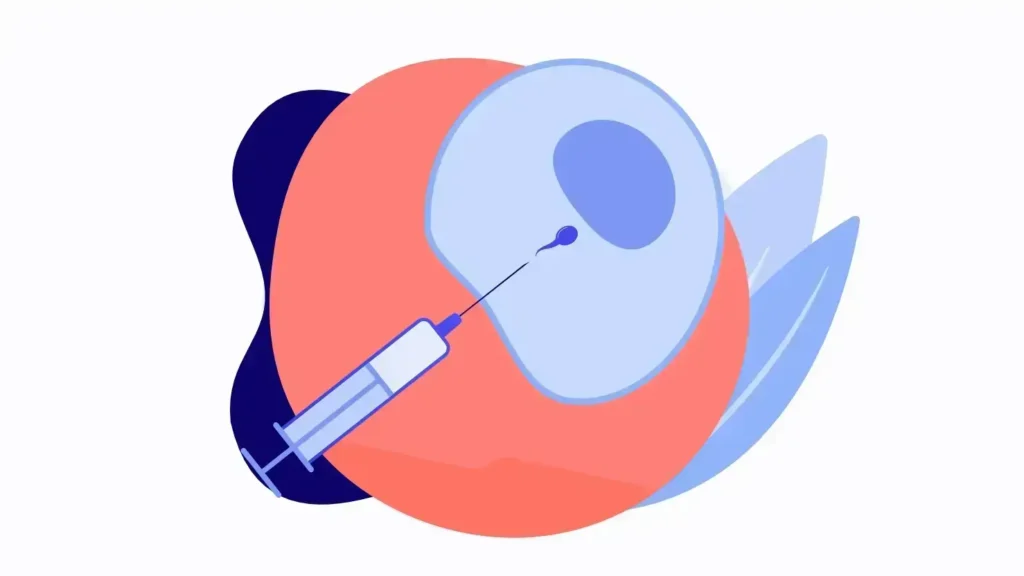
KL Fertility Centre, located in Bukit Damansara, Kuala Lumpur, offers Intracytoplasmic Sperm Injection (ICSI), a highly advanced fertility treatment for severe male infertility, poor sperm quality, or previous IVF fertilisation failure. With RTAC accreditation, more than 25 years of expertise, and internationally trained specialists, the centre provides world-class ICSI care in Malaysia, attracting patients locally and internationally.
ICSI gives embryologists direct control over fertilisation, ensuring success even with compromised sperm. This precision has made ICSI a cornerstone of modern IVF, greatly improving outcomes for couples facing male infertility or previous fertilisation failure.
Years of Fertility Expertise
ICSI Fertilisation Rate
ICSI Cycles Performed
Certified
Intracytoplasmic sperm injection (ICSI treatment) involves injection of a single sperm into an egg in order to cause fertilisation. The steps involved are the same as for IVF, except that in the laboratory, a single sperm is picked up with a fine needle and injected directly into the egg.
Just as IVF changed the destiny of women with damaged tubes, ICSI (Intracytoplasmic sperm injection) is another fertility treatment which has revolutionised the treatment of male infertility. Without it, millions of men with poor or weak sperm would never be able to father babies. With male infertility increasing worldwide, more and more couples are having to resort to ICSI treatment to have children.
At KL Fertility Centre, this precision technique is performed within an RTAC-accredited environment, combining more than 25 years of expertise with advanced laboratory standards. For many patients, ICSI is not just a procedure. It is the breakthrough that turns possibility into parenthood.
ICSI is specifically recommended when natural fertilisation or standard IVF is unlikely to be successful. Your fertility specialist will assess your individual situation and advise whether ICSI is appropriate for your case.
For men with no sperm in their ejaculate (azoospermia), whether due to a blockage, a previous vasectomy, or a production problem, sperm can often be retrieved surgically and used for ICSI. KL Fertility Centre offers the following surgical sperm retrieval techniques:
Percutaneous Epididymal Sperm Aspiration. Sperm is aspirated from the epididymis using a fine needle. Suitable for men with obstructive azoospermia (e.g., vasectomy or blocked ducts).
Testicular Sperm Aspiration. Sperm is extracted directly from testicular tissue using a needle. Used when epididymal sperm retrieval is not possible.
Microsurgical Testicular Sperm Extraction. A microsurgical technique to locate and retrieve sperm from men with non-obstructive azoospermia where conventional retrieval may fail.
KL Fertility Centre offers microfluidic sperm sorting, an advanced sperm preparation technique that selects the highest-quality sperm by guiding them through microscopic channels designed to replicate the natural environment of the female reproductive tract.
Unlike conventional sperm preparation methods, microfluidic sorting selects sperm based on motility and membrane integrity without centrifugation, reducing DNA fragmentation and oxidative stress. This results in a sperm sample with higher motility, intact membrane integrity, and reduced DNA fragmentation, which may improve fertilisation rates and embryo quality, hence improving chances of IVF or ICSI success. Microfluidic sperm sorting is particularly beneficial for couples with male factor infertility, high sperm DNA fragmentation, or previous failed ICSI cycles.
An ICSI cycle at KL Fertility Centre follows the same clinical pathway as IVF, with the addition of the microinjection step in the laboratory:
Both partners undergo a full evaluation: semen analysis and, where indicated, sperm DNA fragmentation testing for the male partner; ovarian reserve assessment (AMH, antral follicle count), hormonal profile, and pelvic ultrasound for the female partner.
The female partner receives hormone injections for around 10 to 12 days, depending on ovarian response, to stimulate the ovaries to produce multiple mature eggs. Dosage is individualized based on age, ovarian reserve, and treatment response.
Regular ultrasound scans and blood tests track follicle development. When follicles reach the target size, a trigger injection is administered to time the final maturation of the eggs before retrieval.
Eggs are collected in a minor procedure (Ovum Pick-Up) performed under sedation or light anaesthesia. A fine needle guided by ultrasound is used to aspirate eggs from the follicles. The procedure typically takes 15 to 30 minutes.
The male partner provides a semen sample on the day of egg retrieval. For men with azoospermia, sperm is retrieved surgically (PESA, TESA, or MicroTESE). The sample is prepared in the laboratory so a suitable sperm can be selected for injection.
A single carefully selected sperm is injected directly into the cytoplasm of each mature egg using a fine glass needle under high-powered microscopy. This step is performed by a specialist embryologist in the embryology laboratory.
Fertilised eggs are cultured in the laboratory for several days. Depending on embryo development and the patient’s treatment plan, embryos may be transferred at the cleavage stage or blastocyst stage. Blastocyst-stage embryos are often preferred when suitable embryos are available. The embryologist will advise on the number and quality of embryos available.
One or two suitable embryos are transferred into the uterus using a thin catheter. Surplus good-quality embryos may be frozen for future use through vitrification. A blood pregnancy test, commonly beta-hCG, is usually performed around 10 to 14 days after the transfer.
Intracytoplasmic Sperm Injection (ICSI) has become one of the most successful techniques in modern IVF, particularly for couples facing severe male infertility or previous fertilisation failure. By directly injecting a single sperm into the egg, ICSI achieves fertilisation rates of over 70 to 80%.
At KL Fertility Centre in Kuala Lumpur, ICSI is performed within our RTAC-accredited laboratory, where more than 25 years of clinical expertise meets advanced laboratory technology.
For couples considering ICSI, we invite you to explore our IVF Success Rates page, where transparent statistics and outcomes are available. This helps patients understand how ICSI contributes to overall IVF success and provides reassurance that treatment decisions are grounded in proven results.
Gold standard for fertility lab and clinical quality in the Asia-Pacific region.
Specialists, embryologists and support staff, all experienced in fertility healthcare.
ICSI microinjection performed by skilled embryologists in an RTAC-accredited laboratory environment.
Protocols adjusted to your ovarian reserve, hormone levels, and age.
For further information on ICSI treatment in Malaysia,
do visit our clinic or contact us
ICSI (Intracytoplasmic Sperm Injection) is a specialised form of IVF where a single sperm is injected directly into each egg by a specialist embryologist, rather than relying on the sperm to penetrate the egg naturally.
The overall clinical process, ovarian stimulation, egg retrieval, embryo culture, and embryo transfer, is the same as standard IVF. The key difference is in the laboratory: ICSI is used when sperm quality is too poor for natural fertilisation to occur reliably.
ICSI is recommended when there is severe male factor infertility, including very low sperm count, poor motility, or abnormal morphology. It is also indicated for men with no sperm in their ejaculate (azoospermia) who require surgical sperm retrieval, couples who have had previous failed or low fertilisation in a standard IVF cycle, cases where very few eggs are retrieved, and when frozen or surgically retrieved sperm is being used.
ICSI success rates vary depending on factors such as the female partner’s age, egg quality, sperm quality, and embryo development. For detailed statistics and outcomes, please refer to our IVF Success Rates page. Your specialist will also advise on your individual prognosis at your initial consultation.
The cost of an ICSI cycle varies depending on your individual fertility profile, medication requirements, and whether additional procedures such as surgical sperm retrieval or embryo freezing are needed. Contact our team for a personalised cost estimate based on your specific protocol.
The ICSI microinjection itself is performed in the laboratory on the retrieved eggs and is not felt by the patient. The procedure that may cause discomfort is the egg retrieval (OPU), which is performed under sedation or light anaesthesia.
Most patients experience mild bloating or pelvic discomfort during the stimulation phase, and some cramping after egg retrieval, which typically resolves within a day or two. The embryo transfer step is generally painless and requires no anaesthesia.
ICSI is a fertilisation technique performed as part of an IVF cycle, so the overall treatment duration is the same as a standard IVF cycle, typically 4 to 6 weeks from the start of ovarian stimulation to embryo transfer. If a frozen embryo transfer (FET) is planned rather than a fresh transfer, the timeline extends by an additional cycle preparation period. Your specialist will provide a more precise timeline based on your individual protocol.
Yes. For men with azoospermia, where there is no sperm in the ejaculate, sperm may be retrieved surgically from the epididymis or testes. Techniques may include PESA (Percutaneous Epididymal Sperm Aspiration), TESA (Testicular Sperm Aspiration), and MicroTESE (Microsurgical Testicular Sperm Extraction).
If suitable sperm is retrieved, it can then be used for ICSI. Whether sperm can be successfully retrieved depends on the cause of azoospermia. Your specialist will assess this before recommending a surgical sperm retrieval procedure.
Good-quality embryos that are not transferred in the current cycle may be frozen through vitrification and stored for future use by the couple. Frozen embryo transfer (FET) cycles are usually less physically demanding than a full stimulation cycle because they do not require another egg retrieval.
Your embryologist will advise on the number and quality of embryos suitable for freezing after your ICSI cycle. Under current Malaysian medical guidelines, embryo donation is generally not permitted. Couples should discuss embryo storage, future use, storage duration, and consent requirements directly with their fertility specialist.
ICSI carries similar risks to standard IVF. These may include ovarian hyperstimulation syndrome (OHSS) during the stimulation phase, a small risk of complications from egg retrieval or sedation, and a higher chance of multiple pregnancy if more than one embryo is transferred.
There is also a possibility that some eggs may not fertilise, or that embryos may not develop to a suitable stage for transfer. Your specialist will review these risks based on your medical history, ovarian reserve, treatment response, and embryo transfer plan before treatment begins.
ICSI does not allow parents to choose whether they will have a boy or a girl. While some studies suggest assisted reproductive techniques may have small effects on birth sex ratios, ICSI is not used as a reliable method for selecting a baby’s sex. The sex of a baby depends on whether the fertilising sperm carries an X or Y chromosome.
If there is a specific medical reason related to serious sex-linked genetic conditions, Preimplantation Genetic Testing (PGT) may be discussed with your fertility specialist.